
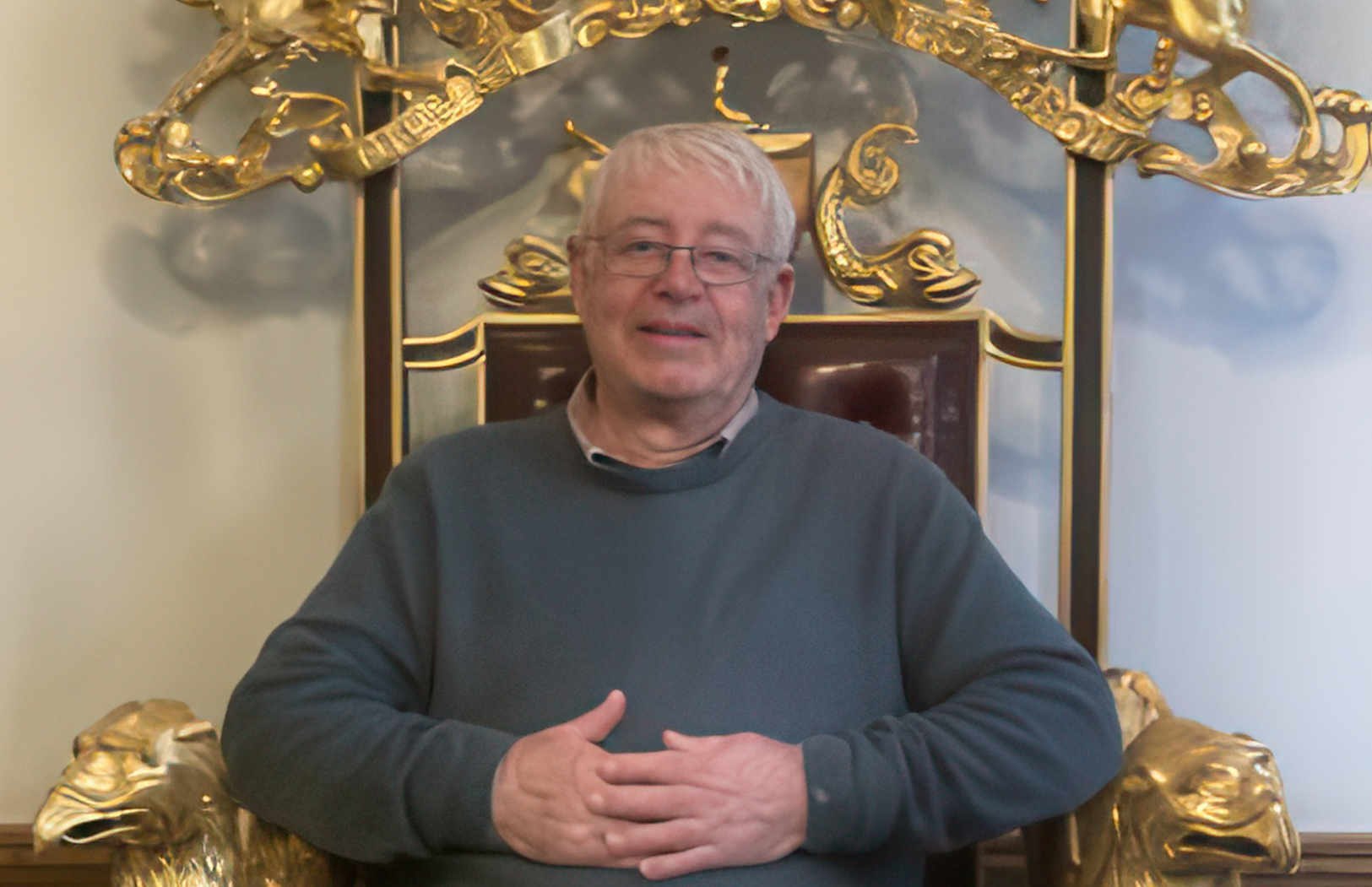
Wishing Members and their Families and Guests a very Happy Christmas
November Lunch: Chairman, Andrew Carver, welcomed 23 members and Andy Stuart, our speaker, on ‘The Allied Intervention in Northern Russia 1918-1920’. £46 was raised for the Chairman’s Charity, Cystic Fibrosis Trust. The raffle raised £28. Note: next meeting is 8th January 2026 (not 1st).
News of Members: We’re sad to report the death of Companion Member Owen Kelly who passed away on November 4th, having had a bad fall but catching pneumonia in hospital. Owen’s weekly anecdotes will be missed. Ian Cullen has advanced dementia. Andrew Frazer has joined Bognor Regis Probus where only past presidents can wear a Probus tie and badge.
Birthdays in December: Ian Cullen, Andrew Jurenko, Peter Warren.
Outings/Events: Terry is planning a river trip with a visit to Hampton Court in the New Year. Please Contact Terry Ribbens on tribbs42@gmail.com for ideas on outings.
Speaker today: Reverend Malcolm Newman ‘Christmas Theme’.
8th January 2026: Andy Thomas ‘Lewes and Bonfire Night’.
Welfare Secretary: Please contact Tony Farrell if anyone knows of a member in difficulty: tonyfarrell1953@gmail.com
Lunch changes by 10.30am the prior Tuesday to chris@moniz.co.uk T: 020 8660 6063. Please email vincentfosdike@gmail.com with articles for the Newsletter.
November Speaker: Andy Stuart ‘The Allied Intervention in Northern Russia 1918-1920’
by James Dearlove

The Club welcomed Andy, a military historian and a former Royal Artillery soldier, who in recent years has written three books.
The common theme of the lecture revolved around when WWI actually ended and the participation of the western Allies in Russia soon after the Revolution. The official ending is regarded as 11th November 1918, however most war memorials indicate the year 1919, furthermore the last execution took place on 31st May 1920 and the Commonwealth War Graves Commission’s official date is the 31st January 1921. Some indeed would argue that the war hadn’t finished until the VE day in June 1945 and sadly a significant number of war-related deaths occurred after the official armistice. The Austro-Hungarian, Ottoman and Russian empires had all collapsed by the end of the main battles. In fact, the Commonwealth War Graves Commission’s official death toll for the last day of the war numbered 863 when the French lost 75 men on 10th November. George Ellison of the Fifth Royal Lancers, a miner by trade, was the last British soldier to die. The very last shot was fired by the Americans using a French artillery gun. Andy played us a poignant recording of the final round of shots followed by silence (as well as bird song which had been added to the recording later). The German general von Lettow-Vorbeck surrendered on 25th November 1918 in Mala (Zambia) due to delayed communications. Victory medals issued by a number of countries have the year 1919 inscribed and indeed the Treaty of Versailles was signed on 28th June 1919 officially ending the war. 3
The Russian Revolution occurred in 1917 when the population was promised ‘Peace, Land and Bread’, followed by the Treaty of Brest-Litovsk on March 3rd 1918 between Soviet Russia and the Central Powers (Germany, Austria-Hungary, Bulgaria and the Ottoman Empire) that officially ended Russia’s participation in World War I. About this time, Winston Churchill became Minister for War, and as an anti-socialist and wanting to undermine the Russian Revolution, embarked on sending supplies to the ice-free port of Murmansk, the mission led by Lt. Colonel George Lund. The Baku oil fields during this period were supplying about a third of the world’s oil. Fighting was continuing in Russia during this unstable period with a considerable of number WWI allies involved, but after several months poor morale and boredom was affecting the UK forces (despite being paid twice the regular army rate) and subsequently the North Russian Force was dispatched in 1919 in order to return them to the UK. Mutinies had occurred in most of the allied armies due to challenging living and working conditions as well as an awareness of mission creep. In September 1919 the last Allied troops departed from Arkhangelsk, and in the following month Murmansk was abandoned. As a result, the White Russians (Mensheviks) were left to fight the Red Army (Bolsheviks) but were beaten when the Bolsheviks launched a counter-offensive in December 1919.
Interestingly, whilst the intervention has been largely overlooked in the west, it is still taught in Russia as western hostility towards the country.
The main theme of Andy’s talk was to emphasise the fact that globally there was no clear-cut date for the end of the First World War, and indeed many thousands of combatants sadly perished after the Treaty of Versailles. Thanks to Andy for an illuminating talk on an important part of history, now often overlooked by the West.
Outing to Watermen’s Hall (Watermen & Lightermen)
by Andrew Carver

Nineteen of us met on Wednesday 29th October at St. Mary at Hill, not far from the Monument to visit Watermen’s Hall. The Company of Watermen and Lightermen of the River Thames was founded in 1514, when the earliest Act of Parliament for regulating watermen, wherrymen and bargemen received Royal Assent from King Henry VIII.
Watermen carried human cargo, whilst lightermen carried goods and cargo. After the Great Fire of London, the Company built their own Hall, where they can still be found today. They remain a working guild and actively involved with the life of the River Thames and those who work on it. The actual watermen and lightermen of the working Thames make up much of the membership.
Built in 1780 by William Blackburn, Watermen’s Hall remains the only original Georgian Hall in the City of London, and it displays all the elegance and restrained scale of the Georgian period. In 1983, the Hall underwent an extension to accommodate larger dining and meeting parties with the addition of the Freeman’s room. Now the Freemen’s Room blends in harmony with the original Georgian Court Room and Parlour Room.
Apprenticeships are still available to this day for most of those in charge of motorised vessels on the Thames – apprentices then become Watermen members.
The Watermen, dressed in their full regalia still precede the carriage proudly carrying their oars, at the annual Lord Mayor’s procession.
A really interesting tour and well worth a visit. Many thanks to Terry for organising this event and to Chris for suggesting it. Afterwards, we attended a short concert (piano recital) at St Mary-at-Hill Church.