
Club News
October Lunch: Chairman, Andrew Carver, welcomed 24 members including our own David Carpenter speaking on ‘Helicopters’. £48 was raised for the Chairman’s Charity, Cystic Fibrosis Trust. The raffle raised £32.
News of Members: David Bone had had a heart op – seems ok but can’t drive for four months. We’re in touch with Companions John Crumplin, Owen Kelly and Andrew Frazer – Report from Tony (Welfare Secretary) today.
Birthdays in November: Andrew Dunlop, Vincent Fosdike.
Outings/Events: Report from Terry on visit to Company of Watermen and Lightermen on 29th October. A visit is planned
to Skinner’s Livery Company on 7th September 2026 (earliest available). Please Contact Terry Ribbens on tribbs42@gmail.com. Terry Ribbens for ideas on outings.
Speaker today: Andy Stuart ‘Tall Tales or Real History?’.
4th December 2025: Reverend Malcolm Newman ‘Christmas Theme’.
Welfare Officer: Please contact Tony Farrell if anyone knows of a member in difficulty: tonyfarrell1953@gmail.com
Lunch changes by 10.30am the prior Tuesday to chris@moniz.co.uk T: 020 8660 6063. Please email vincent@fosdike.com with articles for the Newsletter.
David Carpenter: ‘Helicopters’
by James Dearlove

Our own David spoke about his helicopter flying career which he skilfully combined with a brief history of man’s early attempt to fly vertically and the development of helicopters over the decades. The mythical story of Icarus and his father and their disastrous attempt to fly with wings made of swan’s feathers and beeswax is well known. Leonardo da Vinci designed a contraption with the intention of taking off vertically some 500 years ago, but the term helicopter was adopted in 1861 from the Greek, ‘helicon pteron’ meaning rotating wings.
In 1907 Paul Cornu built a contraption which managed to hover a few feet before crashing dramatically into a heap of components! Count Juan de la Cierva, built a gyrocopter during the 1920’s which had an undriven rotor and a normal propeller allowing the machine to accelerate on the ground causing the rotor to generate lift. It was a success and was exported within Europe and the USA.
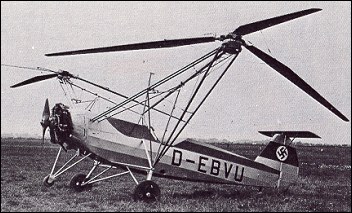
In 1938 the Germans built the first true helicopter, a Focke-Wulf 61. World War two followed, limiting helicopter development, although one was built capable of lifting a field gun beneath an autogyro, designed to be flown from a surfaced submarine!
Development of helicopters ‘took off’ significantly after the war during the early 1950’s when aircraft constructors had surplus capacity. David described the evolution and makes/models and modestly continued by describing the complexities of flying helicopters. David’s first posting in the Army was to a gunnery regiment in Germany involving extremely low and fast flying, principally to direct the fire of artillery and armoured regiment guns. A few years later David converted to the Westland Scout, a more advanced (gas turbine powered) aircraft which he flew in Northern Ireland assisting the infantry to secure the border. David spent his last eighteen months in the Army flying anti-tank helicopters around Yorkshire.
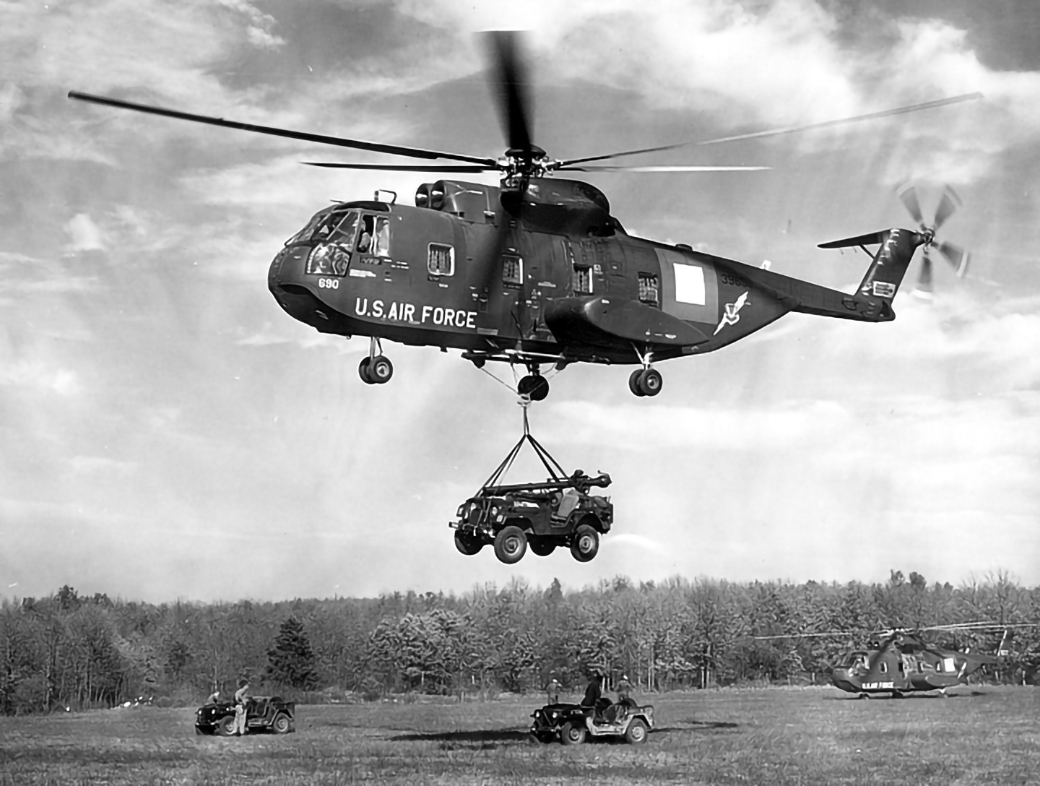
At the age of 32, David transferred to British Airways Helicopters in Aberdeen flying precarious routes to oil rigs in the S61 a heavy twin-engined aircraft which had the ability of flying on instruments. Helidecks were often moving in bad weather requiring instrument approaches sometimes in snowstorms and in the dark.
During this period David obtained his captaincy, and Shell, which operated the Brent oilfield, decided to operate from Aberdeen Airport when BA bought six Chinooks capable of carrying 44 passengers with a range in excess of 600 nautical miles. This was an even more challenging aircraft, twin-rotored with the ability to fly automatic approaches on the Instrument Landing System requiring further intensive training. Brent return flights took about 5-6 hours but the Chinook has an automatic control system which once engaged even permitted the pilot to drink coffee!

David’s final role was to fly helicopters on a regular route between the mainland and the Isles of Scilly, again often braving extremely challenging weather conditions. Our redoubtable Probus member reckons that he has flown over to the Scilly Isles approximately 4,000 times! How many can say that? Thank you David for a much anticipated and interesting talk.
‘When you’ve got to go, you’ve got to go’
by Vincent Fosdike
Here we are again ensconced in the comfortable aroma filled coffee house at 7.30 am. Regular customers get their regular orders, grab a seat, open their laptops and try to ignore the somewhat tedious misbehaviour of a small child as it pulls some display items down from a shelf. Its parent is of course absolved from all collateral responsibility merely by entering a public space. A neat trick borrowed from public transport and of course the high stress area of infant education. Apparently the staff must smile indulgently to avoid the police being called by the parent, (you know how the game is played).
In the midst of the rush hour swirl patrons charge in and make for the “comfort facility” having been stuck on a train and yet to do the final stage to work from the bus stop outside the door. The facility may be entered by knowing the door code (on the bottom of a receipt) or asking for the key at the desk at this particular emporium. Old hands may reach over and take it from a hook.
New patrons simply don’t know the system here and some who don’t intend to purchase anything are refused the key, and after a minor altercation are shown the exit door!
I know where the key is and when in a benevolent mood will tip the wink to a deserving, possibly distressed customer. They are always grateful. Sometimes the key is exchanged midway between in and out users like a signal token on a single track railway.
This morning this delicate pavan breaks down.
The key is not on the hook and the door is locked. Two loyal customers wait patiently, one checking the live bus arrivals on his phone. The minutes pass and enquiries are made of the manager who concludes that the facility is unoccupied. Anxiety levels rise and decisions become serious. Can they make it to work, what about the station or the local health clinic open in half an hour?
No there is no spare key to hand. This is after all not a public convenience . Would you like another coffee ?
Someone remembers the free-spirited mother had popped in whilst her child was disarranging the exchange bookshelf and knocking over the model of an Italian Waiter.
The manager takes the initiative and nips out to see if she is at the bus stop. She is not, and he returns to hastily write a sign declaring one of his major attractions is not available. Lap tops start closing as users reschedule their journey hastily checking forthcoming bus arrivals on their phones. I am due at the clinic for a jab and will be O.K. but many will have their endurance tested.
Maybe tomorrow the key will reappear.Can anyone tell me exactly how to take a wax impression of a key and who can cut one from it? Exclusivity is a wonderful privilege.